
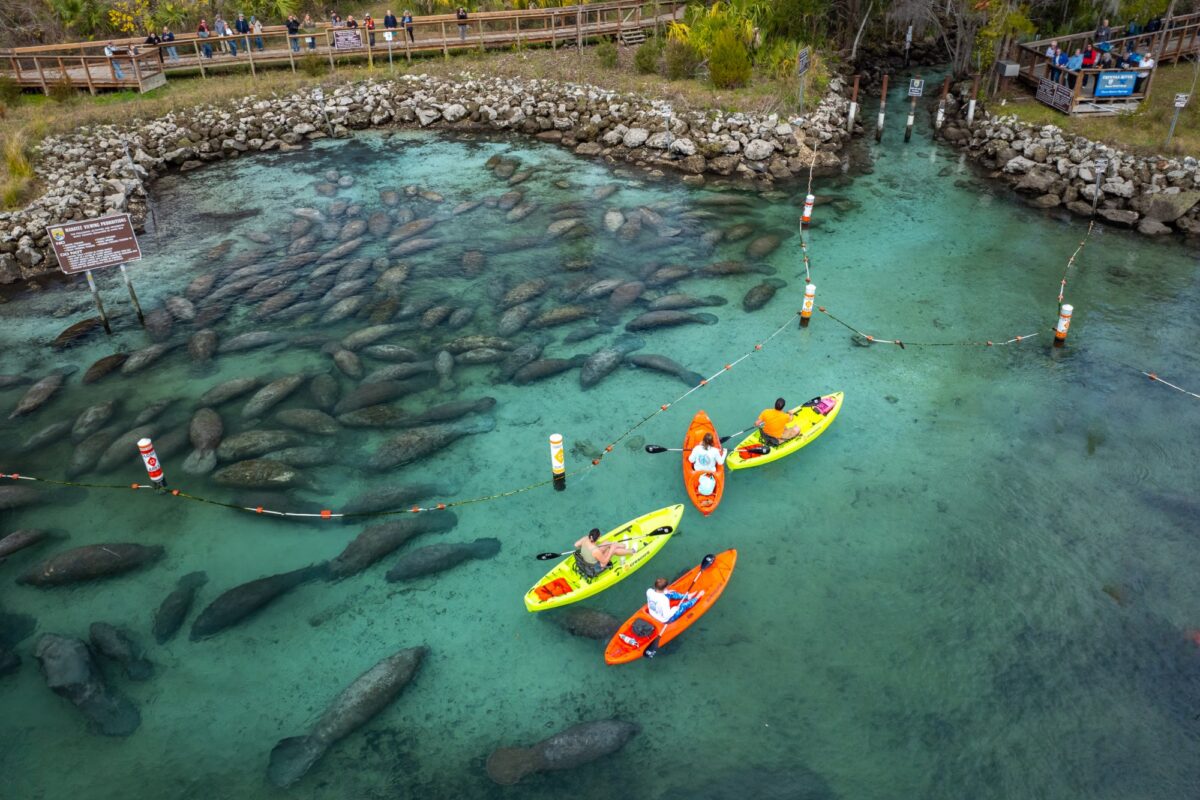
Like any good Floridian, some of my best growing-up memories on Florida’s coldest winter mornings involve Crystal River: waking up before the sun, squeezing into a wetsuit, getting out onto the water with a hot coffee in hand, then slipping below the surface to swim with the state’s gentlest giants.
Fortunately for me, an honorary “aunt” has a house just downstream from Three Sisters Springs, a trio of natural springs connected to the Crystal River, located about two hours north of Tampa. She loves gathering a group to swim among the manatees congregating in the water, which stays 72 degrees year-round. Watching the enormous sea cows bob around in the glow of the rising sun as steam rises off the surface of the clear spring waters is nothing short of magical.
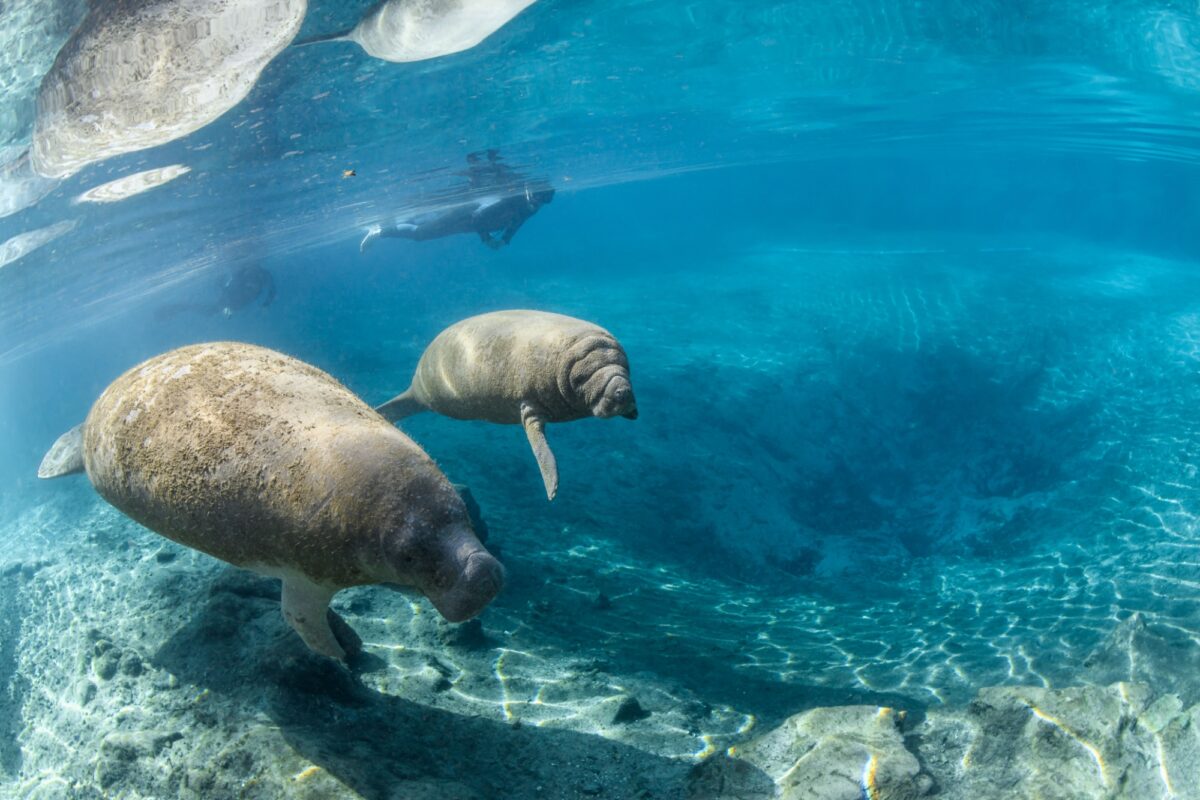
Anyone can experience this, if you plan ahead. Crystal River, on Florida’s Gulf Coast, is the only place in the state where swimming with wild manatees is specifically managed and permitted; hundreds of them gather around the area’s natural springs every year.
November 15 through March 31 is manatee season, when falling water temperatures send the animals searching for warmer refuges; the most concentrated gatherings typically occur during winter’s coldest snaps, December through February.
To swim with them, book a guided excursion with a permitted operator. Prefer to stay dry? Get Up and Go Kayaking offers guided clear-kayak tours, allowing you to watch manatees glide beneath you.
However you choose to see them, there’s a right way to go about it. Remember that these warm-water refuges aren’t tourist attractions to the manatees. Practice passive observation by floating quietly at the surface; never chase, touch, disturb or feed manatees; and always respect protected sanctuaries (some are completely off-limits to swimmers).
These warm-water refuges are essential to their survival, and protecting these state treasures is paramount. As a fourth-generation Floridian, I can confirm that even after all these years, there’s something extraordinary about seeing Florida’s beloved official state marine mammal in its natural habitat and ensuring future generations can do the same.