
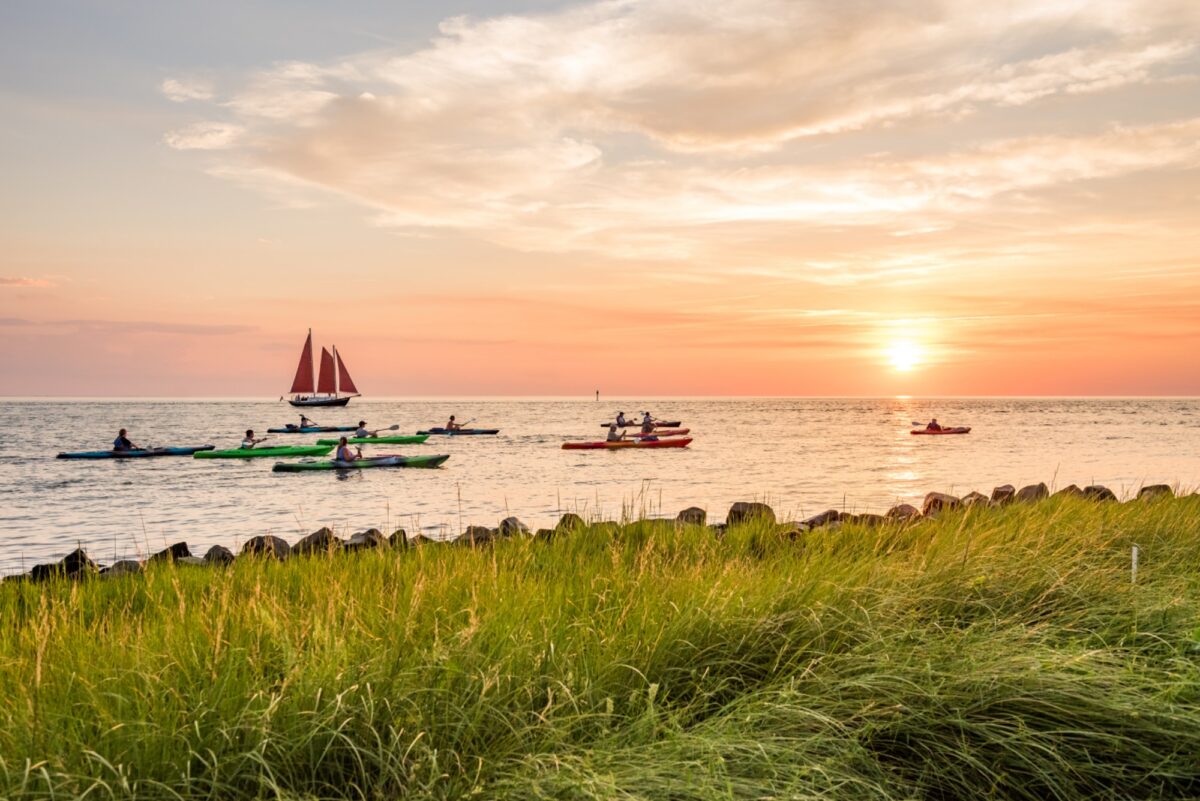
If you’re craving wide-open spaces and solitude, load up the car and head to North Carolina’s Outer Banks. This narrow chain of barrier islands, separated from the mainland by broad sounds and waterways, offers miles of shoreline, quiet coastal communities and stretches of protected wilderness.
Rather than large cities, you’ll find charming seaside towns and villages, each with its own personality. Rushing through your road trip with a packed itinerary would defeat the whole point of the Outer Banks. Instead, follow this leisurely five-day route that takes you through the highlights of the region.
Day 1: Corolla and Duck
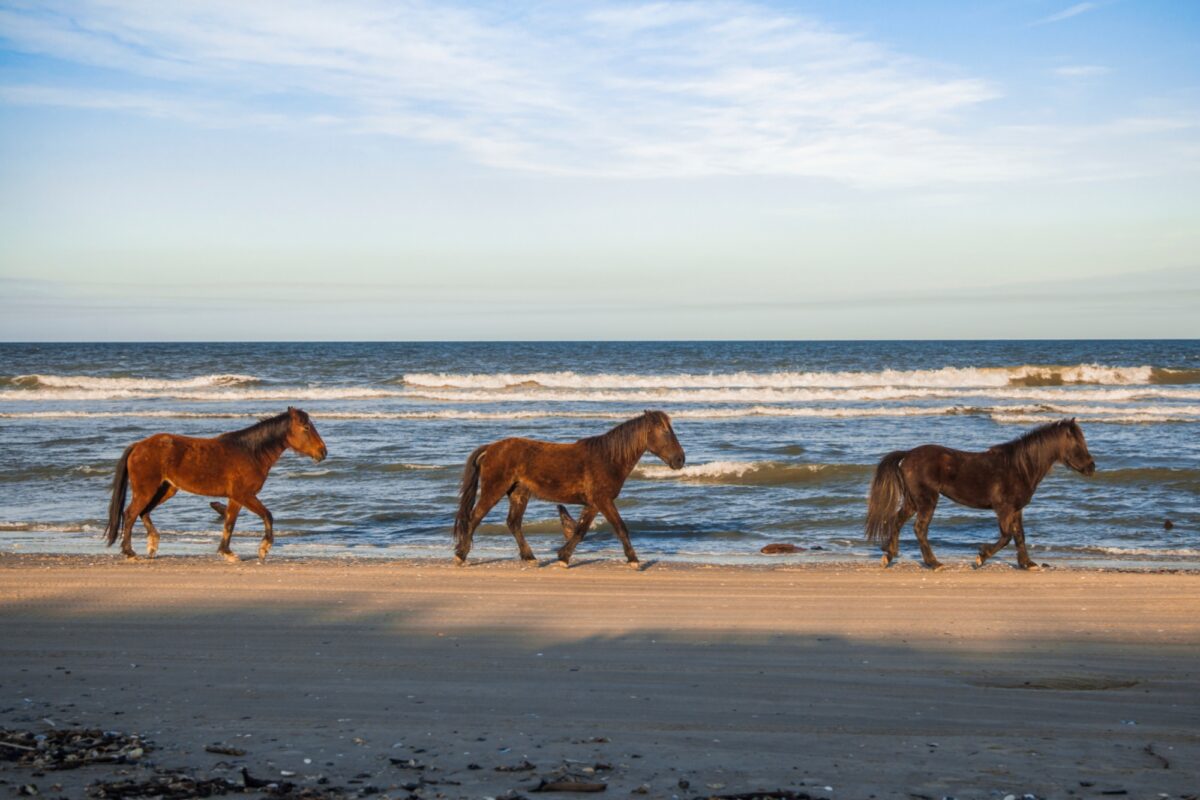
The northernmost stretch of the islands feels delightfully rugged. Out on the beaches past Corolla, descendants of Spanish horses brought to the Outer Banks centuries ago roam freely along the beach. You’ll need a four-wheel-drive vehicle to navigate the deep sand and see them, or you can hop on a tour with one of the local open-air safari operators. Remember, these horses are truly wild, and the law requires you to keep at least 50 feet of distance.
Back on paved roads, look up to find the Currituck Beach Lighthouse. Unlike its striped siblings to the south, this 1875 tower was left as bare, exposed red brick. From March 21 to November 30, you can climb the 220 iron steps for sweeping views of Currituck Sound and the Atlantic Ocean. Afterward, wander the lawns of Historic Corolla Park before driving about 20 minutes south to Duck. Walk the wooden boardwalk along the sound, grab an ice cream and watch the sunset show.
Day 2: Kill Devil Hills and Manteo

Standing on the grassy field at the Wright Brothers National Memorial in Kill Devil Hills, it suddenly makes perfect sense why Orville and Wilbur hauled their gliders to this specific, windy stretch of sand for the first successful airplane flight in history.
Down the road in Nags Head, that same coastal wind is actively reshaping Jockey’s Ridge. Walking up this towering system of shifting sand dunes is a thigh-burning workout (pack water and wear shoes, because the sand gets scorching hot by midday), but you’ll be rewarded with unique views of the Sahara-like landscape with the ocean on one side and the sound on the other.
Trade the beach for the harbor this afternoon by taking Highway 64 west across Roanoke Sound to Roanoke Island. This is where English settlers famously vanished in the 1587 Lost Colony mystery, and today the island’s main town, Manteo, is a walkable harbor town on Shallowbag Bay. Stroll the waterfront, and choose whichever restaurant looks the most appealing. Then, see what’s playing at the vintage Pioneer Theater.
Day 3: Rodanthe and Buxton
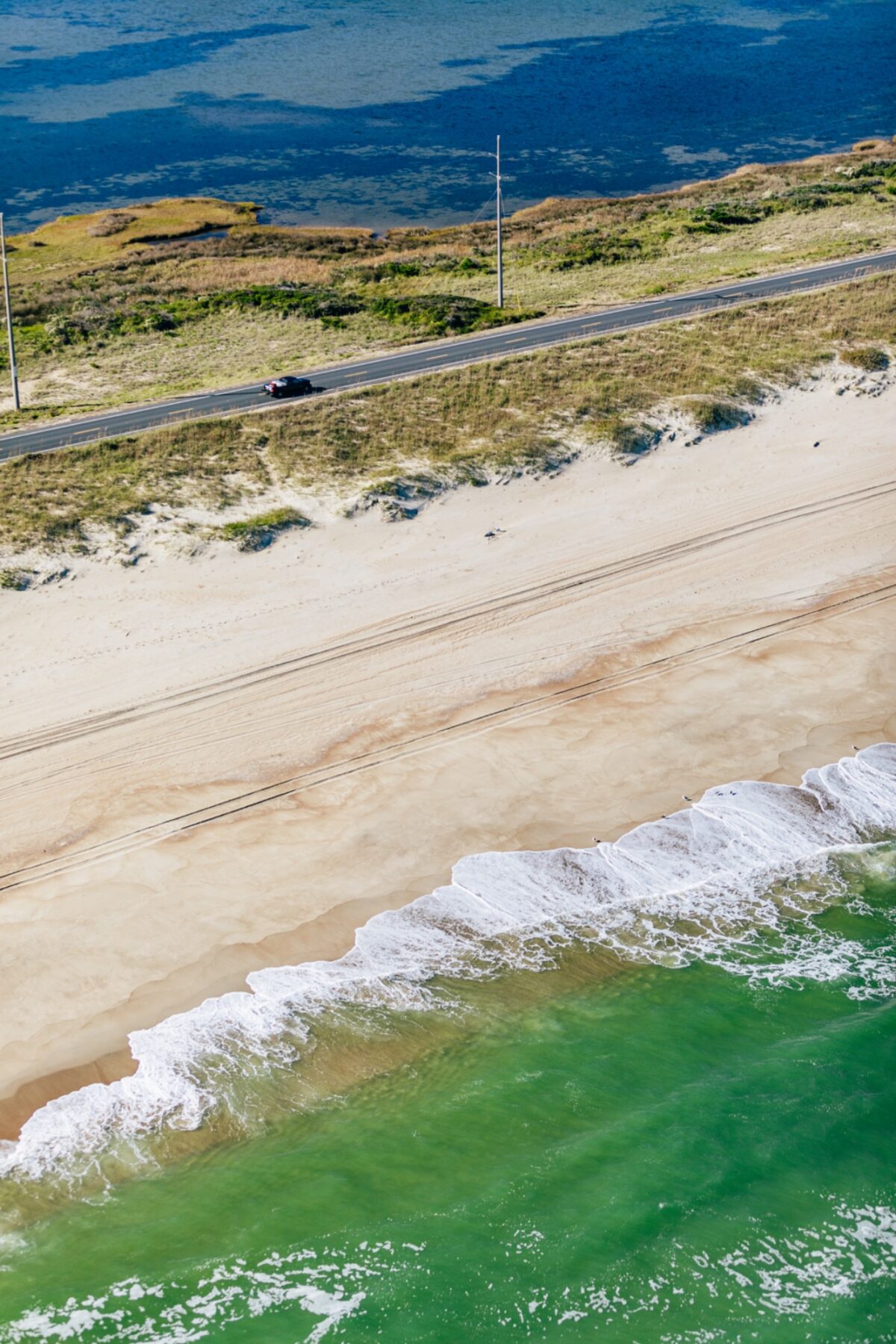
Point your car south on NC Highway 12. This two-lane road passes through Cape Hatteras National Seashore, making for an incredibly scenic journey.
Your first landmark is the boldly striped Bodie Island Lighthouse, standing guard over the marsh. Farther south, the Pea Island National Wildlife Refuge offers a quiet place to stretch your legs and watch migratory birds wading in the shallows.
As you pass through the tiny villages of Hatteras Island, pull into the Chicamacomico Life-Saving Station in Rodanthe. The weathered wooden buildings tell the harrowing, real-life stories of early surfmen who risked their lives rowing wooden boats into dangerous waters to rescue shipwrecked sailors. The station was established in 1874 as part of the U.S. Life-Saving Service, and its crews became known for their daring rescues along this notoriously dangerous stretch of coastline.
End your afternoon in Buxton at the iconic, spiraled Cape Hatteras Lighthouse. The lighthouse is closed to climbers during an ongoing restoration, but you can still explore the grounds. It’s also worth learning how engineers literally rolled this 198-foot brick giant 2,900 feet inland in 1999 to save it from shoreline erosion.
Day 4: Hatteras Village and Ocracoke
Take a slow morning in Hatteras Village. Before leaving the island, pop into the Graveyard of the Atlantic Museum to see artifacts and exhibits exploring the thousands of shipwrecks and centuries of maritime history along the Outer Banks.
The next leg of the journey is by water. Pull your car onto the metal deck of the Hatteras-Ocracoke vehicle ferry for the roughly hour-long crossing to Ocracoke. Scan the boat’s wake for dolphins and enjoy the salt air as the islands come into view.
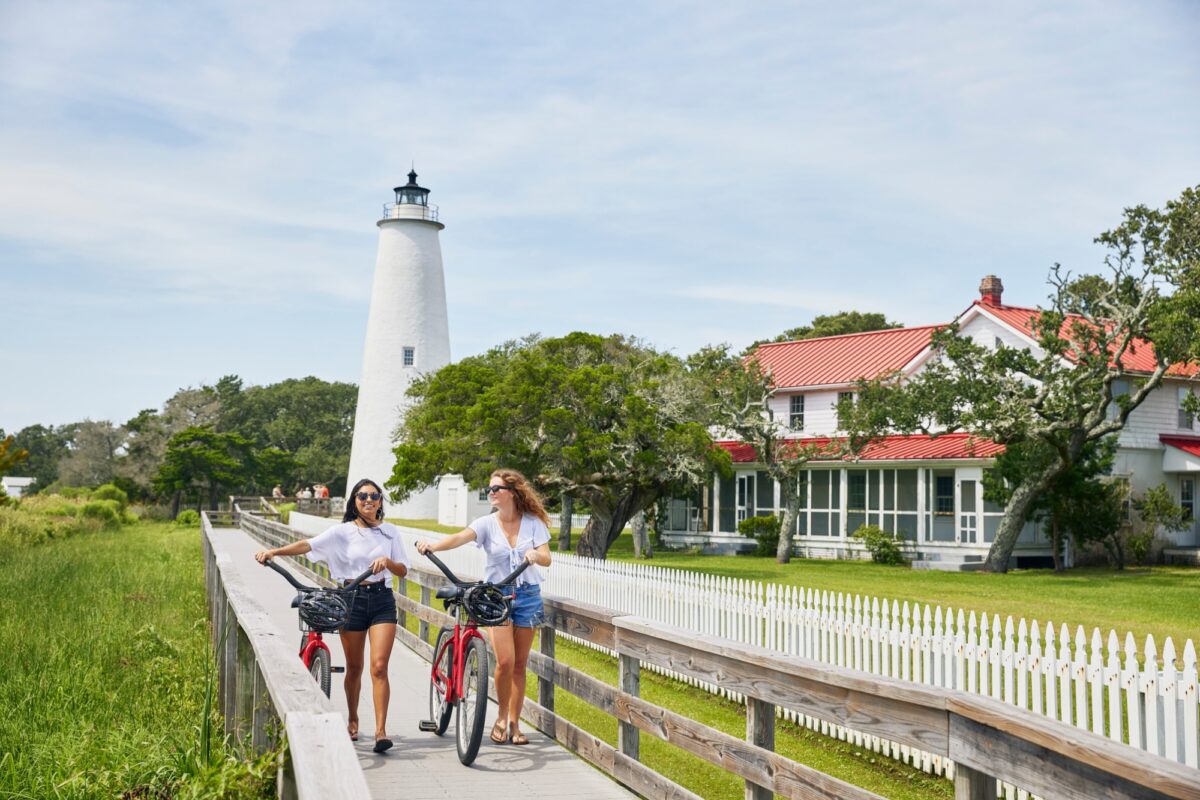
You’ll land on the northern, wild end of Ocracoke Island with a beautiful 13-mile drive ahead of you before reaching the village. Ocracoke Village wraps around Silver Lake Harbor and is best explored on a rented beach cruiser bike. Pedal past the whitewashed 1823 Ocracoke Lighthouse and through narrow lanes lined with fig trees and small art galleries.
Day 5: Ocracoke
Save your last day for the slowest pace of all. Ocracoke is known for its beautiful, relatively undeveloped beaches. Away from the village, you’ll find long stretches of sand backed by sea oats and dunes, with few buildings interrupting the scenery.
Spend the morning beachcombing, or walk the shady maritime forest trails at Springer’s Point Preserve, which lead through the woods and marsh to a quiet soundside beach overlooking Teach’s Hole, the waters where the infamous pirate Blackbeard was killed. The approximately 122-acre preserve has no parking and is accessible only on foot or by bicycle, so plan to leave your car in the village.
To get back to the mainland, you can take a toll ferry to either Cedar Island or Swan Quarter. Both are long, relaxing rides: approximately 2 hours and 15 minutes to Cedar Island and about 2.5 hours to Swan Quarter. Reservations are recommended, particularly during busy travel periods, and can be made up to 90 days in advance. If you’re heading north instead, just catch the Hatteras ferry back the way you came. Whichever route you take, grab a spot on the upper deck and watch the islands slowly shrink into the horizon.
READ MORE: Catch a break at these iconic North Carolina surf spots
READ MORE: I’d drive 2 hours for this sandwich in a tiny North Carolina town