
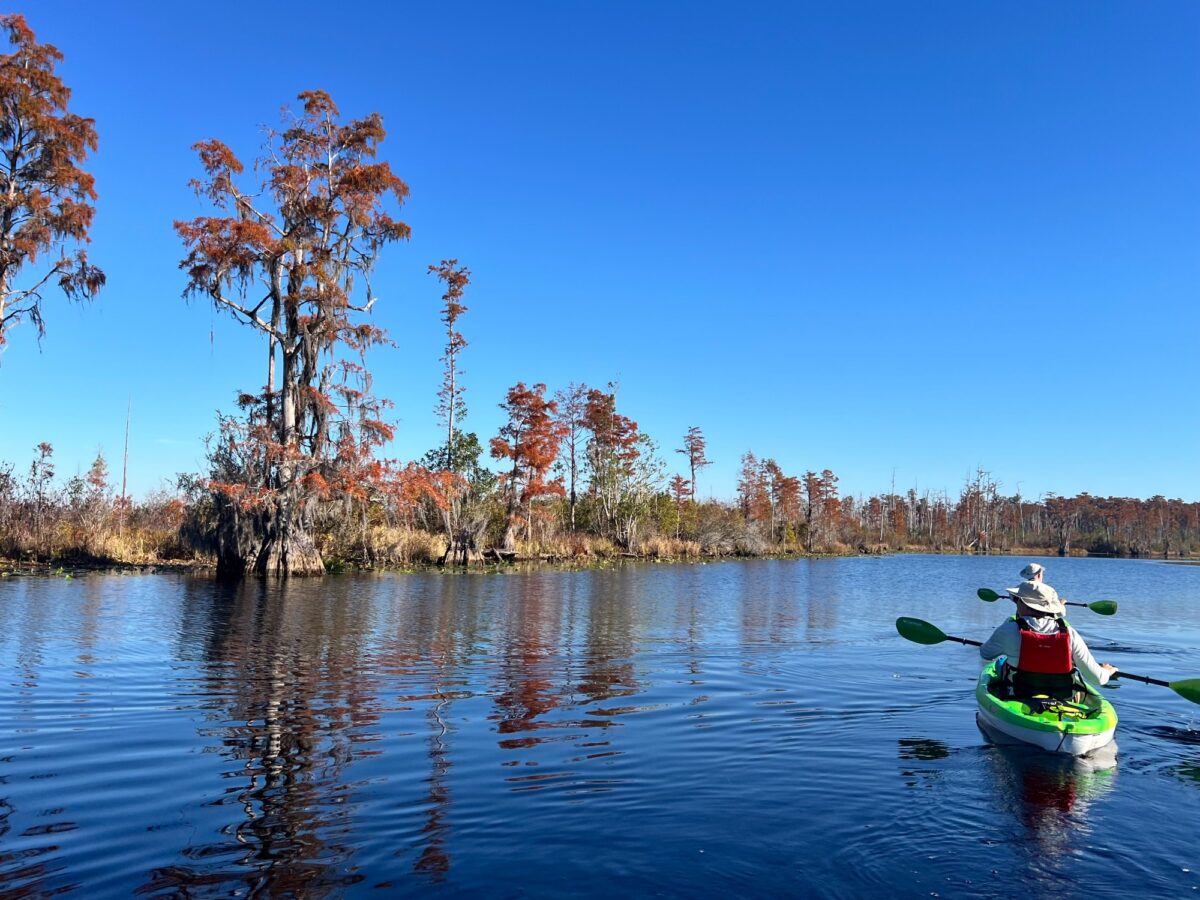
Georgia’s first-ever UNESCO World Heritage Site is an outdoors enthusiast’s dream.
Covering more than 407,000 acres in Southern Georgia and Northern Florida, the Okefenokee National Wildlife Refuge earned a World Heritage Site designation from UNESCO earlier this year for its ecological significance and biodiversity.
In the refuge you’ll find the headwaters of the Suwannee and St. Marys rivers and Okefenokee Swamp, the largest blackwater wetland ecosystem in North America and the least disturbed freshwater ecosystem on the Atlantic Coastal Plain, according to the University of Georgia’s River Basin Center. The wilderness is home to more than 1,000 species, including an estimated 10,000 to 13,000 American alligators as well as threatened and endangered species like the red-cockaded woodpecker, indigo snake and wood stork.
Visitors can explore on foot or by watercraft. Via Okefenokee National Wildlife Refuge’s Folkston entrance, visitors can access several short walking trails. The most popular is Chesser Island Boardwalk, which offers a fully accessible elevated walkway (about 1.3 miles out and back, according to All Trails) that winds into Okefenokee Swamp and ends at the 40-foot Owls Roost Tower. On the way you’ll pass through moss-draped cypress trees, scrub shrubs and prairies with ample opportunities for wildlife sightings. Swamp Island Drive offers a driveable route, stretching 7.4 miles with numerous wildlife and historic points of interest along the way.
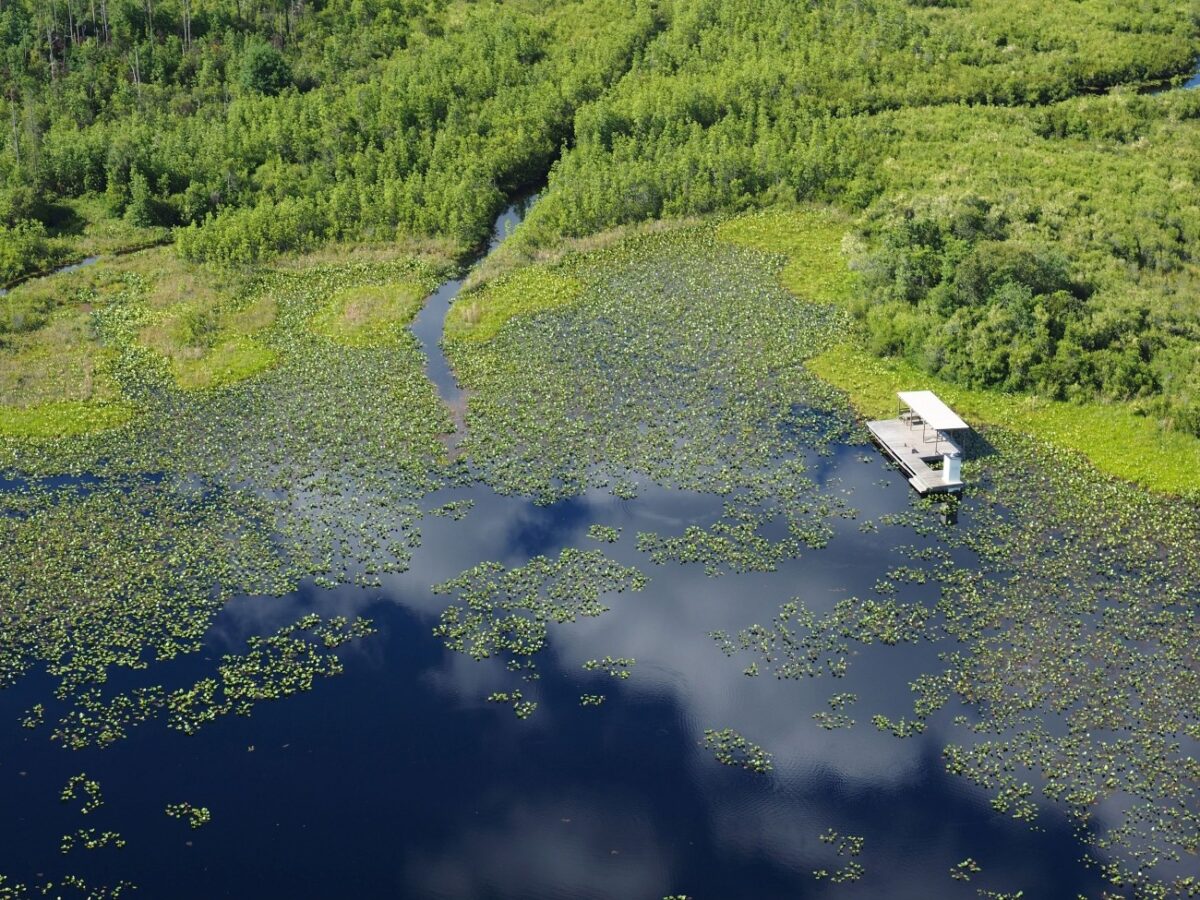
For wilderness camping, the refuge has seven platforms equipped with partial roofs, picnic tables and pit toilets while two islands offer fire rings for campfires. Visitors must obtain a camping permit in advance.
Okefenokee Swamp also has more than 120 miles of water trails snaking through ancient cypress forests and wet prairies. Canoes and kayaks can be rented for self-guided adventures via Okefenokee Adventures, who also offer naturalist-guided tours aboard Carolina Skiff boats. Georgia-based Driftwood Paddling Tours also runs both private and small-group guided experiences.
“There is something especially intimate about experiencing the refuge with a small group,” says Amanda Triemer of Driftwood Paddling Tours. According to Triemer, the company has seen a recent bump in interest and plans to expand their tour offerings in the refuge next year. “We can slow down, paddle quietly and spend time observing wildlife and noticing details we might otherwise miss. Giving people that space to connect with the swamp is one of our favorite parts of guiding,” she says.
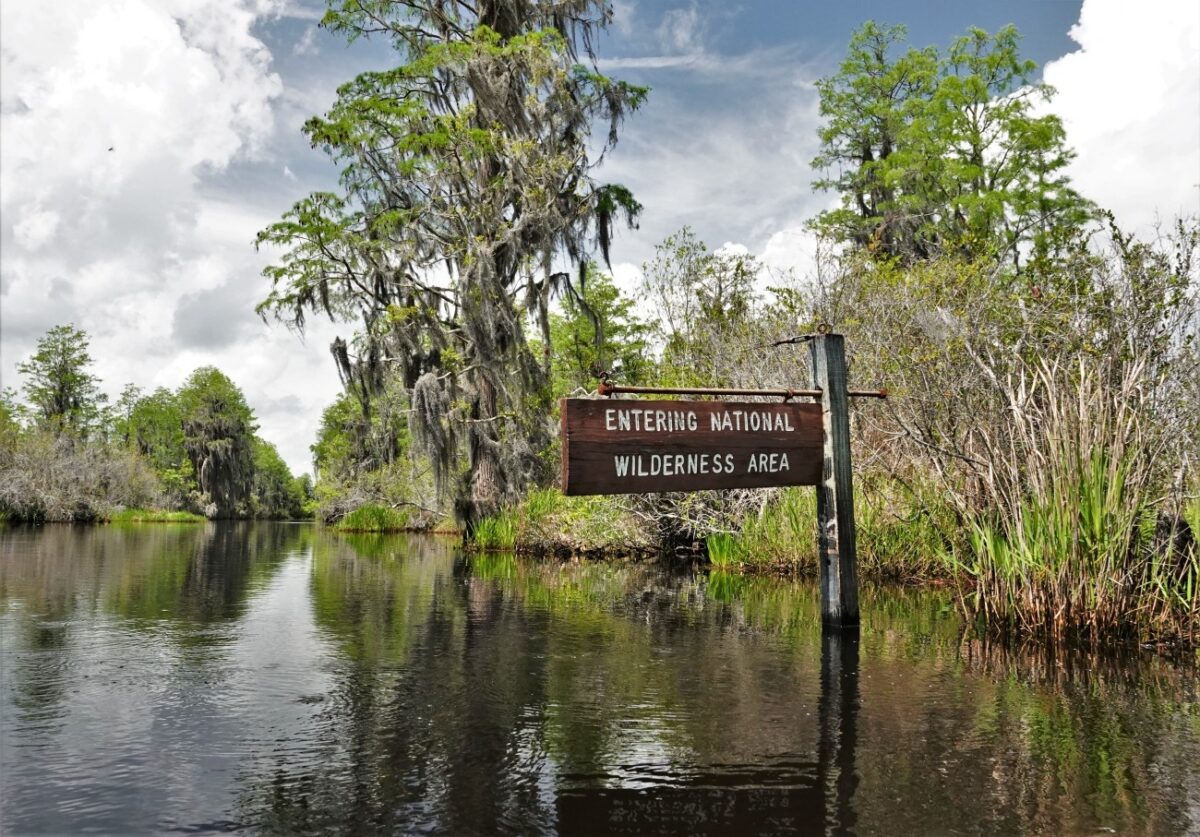
Photo: Larry W. Woodward / USFWS