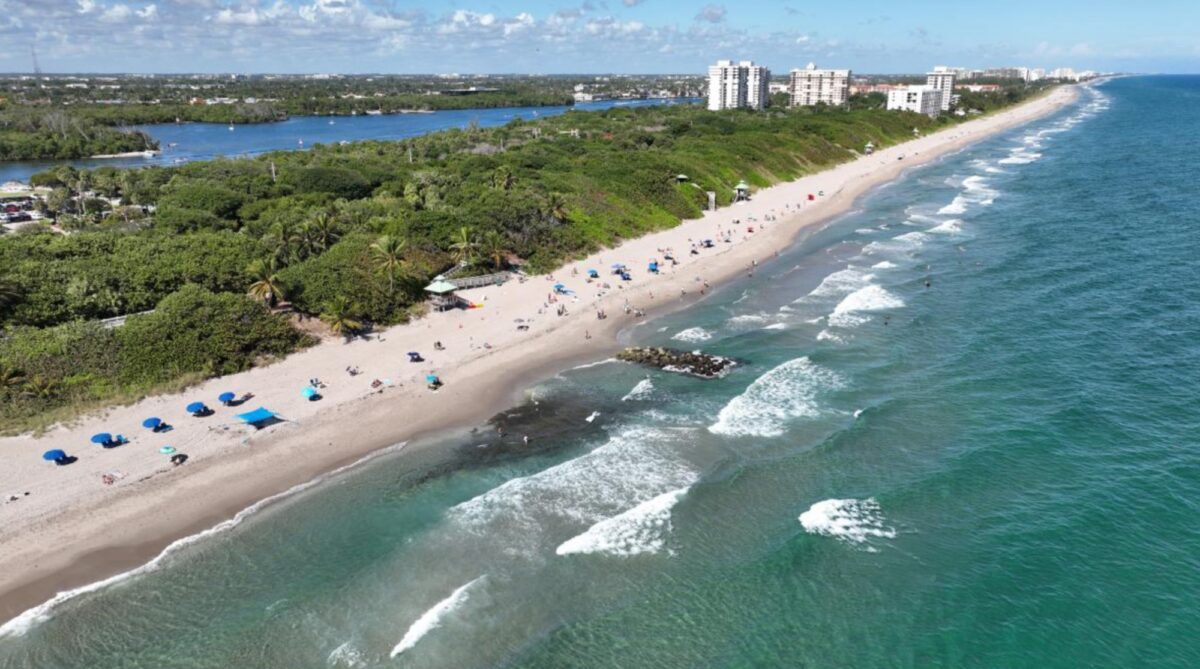
At about 95 acres, Spanish River Park is one of the largest beach parks on South Florida’s south Atlantic coast, and protecting wildlife — even the smallest residents — is taken seriously here.
The park spans a barrier island in Boca Raton, with the Intracoastal Waterway on one side and the Atlantic Ocean on the other. Park on the Intracoastal side of Spanish River Park, and you’ll find yourself in a shaded hammock of banyan trees and mangroves, watching birds from a 40-foot observation tower.
Walk through one of three pedestrian tunnels under Ocean Boulevard, though, and you surface somewhere else entirely: a wide, uncrowded Atlantic beach with no restaurants, souvenir shops or high-rises that crowd so much of Florida’s coastline.
More than 25 species of wood warblers have been recorded passing through during migration, enough to put the park on the Florida Birding Trail. And birds are aren’t the only wildlife in the park.
When I visited in 2025, Leanne Welch, manager of the nearby Gumbo Limbo Nature Center, walked me past a staked sea turtle nest wired with a data logger tracking incubation temperature. A hatchling’s sex isn’t determined by genetics here; it’s determined by heat. Warmer sand produces more females, and cooler sand more males. “Hot chicks and cool dudes,” Welch said, only half joking.
It took a year-long, multi-agency effort — sustainability officials, lifeguards, park rangers and Gumbo Limbo staff — to document practices already in place and earn Blue Flag certification, a designation only two Florida beaches hold. Spanish River Park is an example of how protecting even the most fragile residents benefits the entire ecosystem.
READ MORE: Why a walk through a swamp might be just what you need