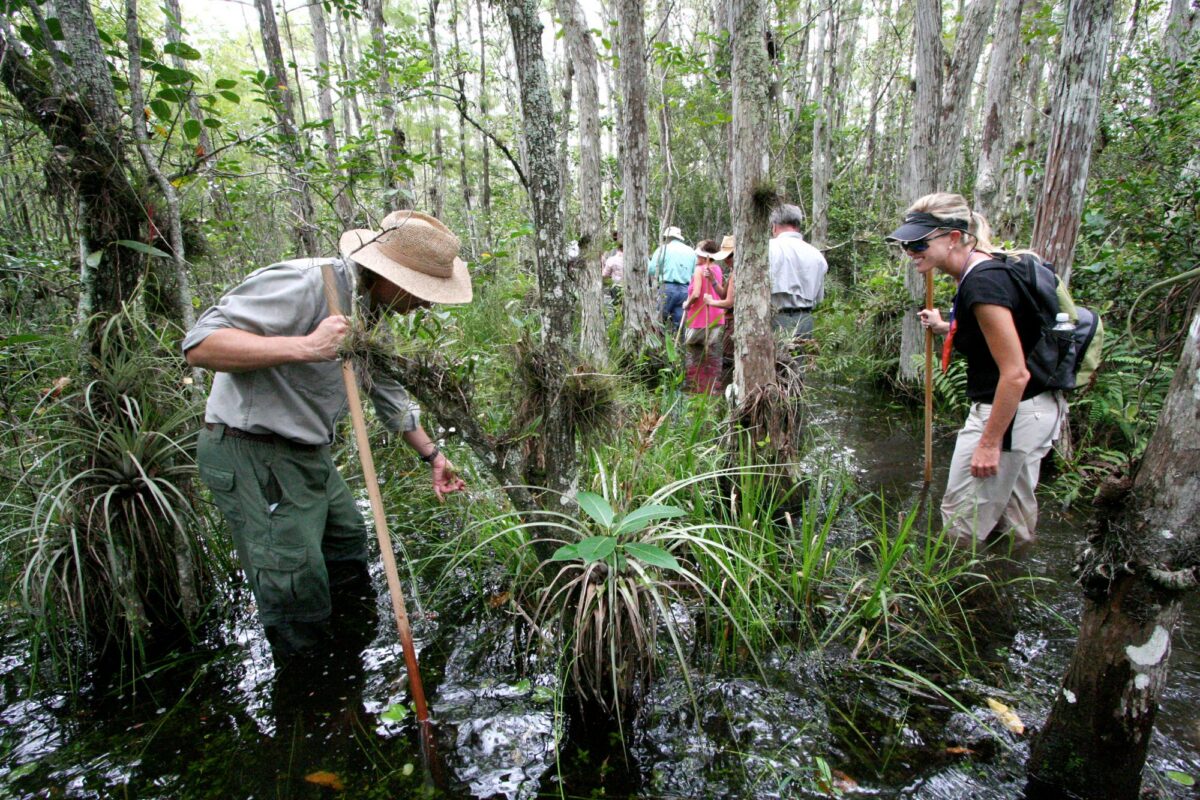
In Big Cypress National Preserve, the wetlands are still as wild as they were thousands of years ago. This is gator country, after all, where water moccasins sun themselves on cypress knees, snapping turtles patrol the waters and even the endangered and elusive Florida panther can be spotted padding silently through the hammocks.
Experienced naturalists like Conny Randolph don’t find that landscape threatening — in fact, she walks through it almost every day.
Swamp walks — also called wet walks, slough slogs or muck-abouts — are an increasingly popular activity in wetland areas around South Florida. Randolph, a Florida Master Naturalist Guide, has spent decades leading them in the preserve as a tour experience through Clyde Butcher’s Big Cypress Gallery, also the home of the conservationist and famed landscape photographer.
Randolph describes the wetlands as “completely surreal; an out-of-this-regular-world [place] that we’re able to duck into for a little while and just come out feeling refreshed, invigorated and inspired all the same.” The walks — intentionally slow, often accompanied by large sticks for balance — are designed to give participants “a completely immersive experience” and time to absorb what they’re seeing.
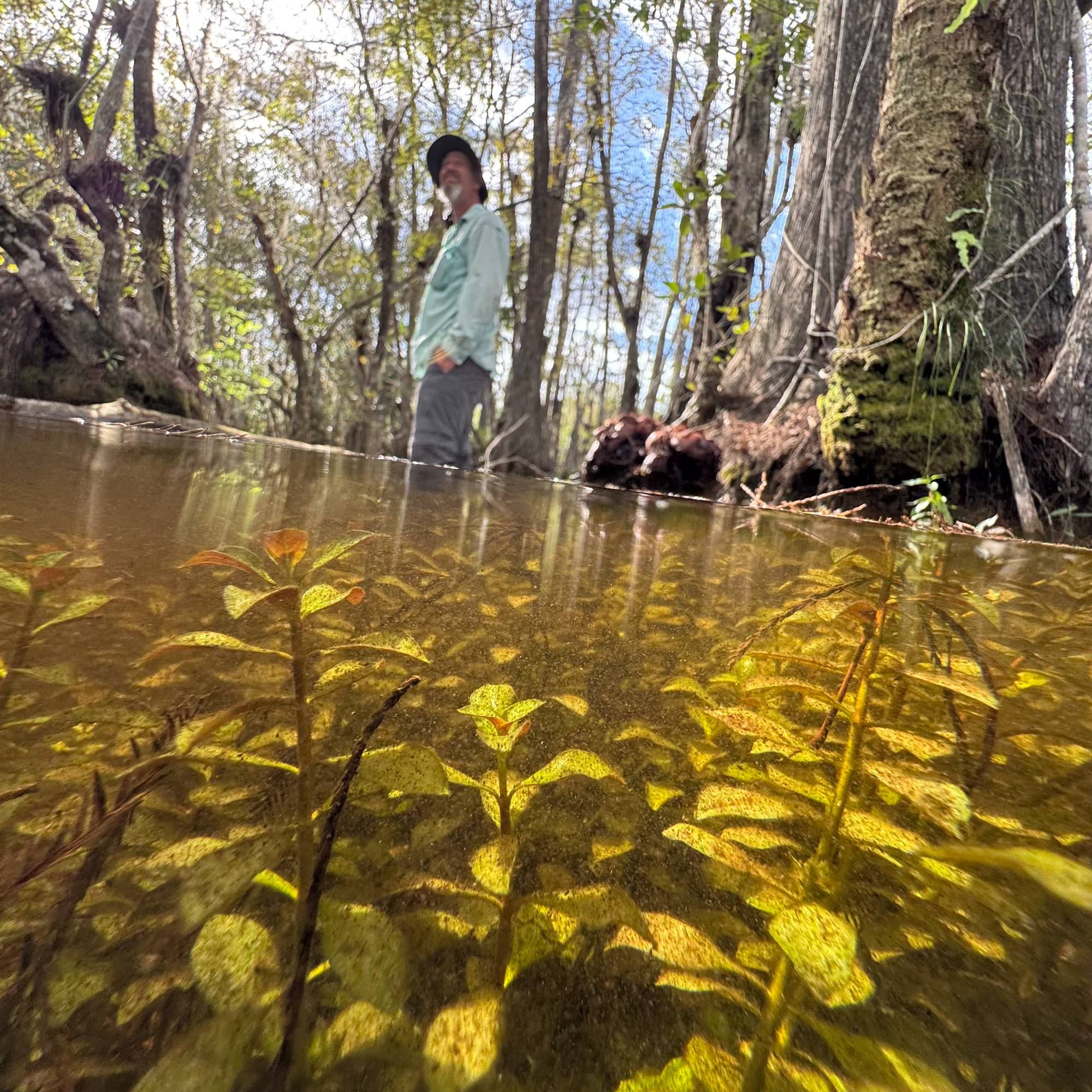
You might expect swamp water to be murky, but here it’s clear and pristine — “probably more pure than some of the tap water that comes out of people’s faucets,” Randolph says. During a tour, Randolph or another guide will stop to identify plants they see, sharing details about how those plants were historically used by native people who inhabited the area centuries ago. Photographers often frequent the tours along with orchid lovers, who come to spot one of dozens of native species that grow on the trunks and branches of bald cypress.
As for wildlife, yes, Randolph says, they do see alligators, snakes and an array of insects. But as with snorkelers and scuba divers who swim past sharks, encounters are rarely dangerous. Alligators that haven’t been fed by people are naturally wary of humans, especially groups, according to Randolph, and guides give animals plenty of room. “I’m not on their menu,” she says.
To the contrary, for many swamp walks turn out to be meditative, even healing, experiences. The walks were a source of solace for Butcher after the death of his son, when he moved to Big Cypress and turned a 14-acre former orchid farm into his home and present-day gallery.
“Once [participants] get past that layer of apprehension,” Randolph says, “they’re usually raving about their experience when they come out of the swamp. If I [recorded] people’s blood pressure before they went in the swamp and after, I think that we would see a huge drop.”
Know Before You Go
What to wear — Randolph recommends walkers wear sneakers, loose pants and long-sleeved shirts to protect against mosquitoes and sawgrass, whose silica-lined edges can leave cuts.
When to go — October through December is ideal due to mild temperatures and high water levels. Hesitant first-timers may prefer the dry season, April through July, when there is little to no standing water.
Where to go — Clyde Butcher’s Big Cypress Gallery offers private guided tours year-round, including Classic, Shallow Water and Dry walks. Outfitters and public preserves across South Florida also offer wet walks. The Friends of Six Mile Cypress Slough Preserve hosts a series of guided wet walks, and the Everglades National Park Institute leads a naturalist-guided Cypress Dome Wet Walk in Everglades National Park.