
Picture it: you’re in St. Pete-Clearwater, the Gulf looks inviting, and you decide on a whim to rent a boat. So did everyone else. U.S. bookings for fishing charters are up 57% in the first half of 2026, parasailing is up 45%, and boat rentals are up 37%, according to Tripadvisor’s midyear data. Locally, about 30% of visitors now get out on the water during their trip, up from 10 to 20% before 2025.
That’s a win for the local economy. It also means a lot more first-timers on water they don’t know. Before you walk up to a marina and wing it, there are a few things worth knowing. We asked two people who spend their days out there, a third-generation charter captain and a kayak guide, for their best advice.
Book early, book local
Captain Dylan Hubbard grew up on the docks at Hubbard’s Marina in Madeira Beach, where his family has been taking people onto the Gulf since 1928.
His first rule is to book early in your visit. Weather happens, and a trip on day one leaves room to rebook on day three. If fishing or boating is the centerpiece of your vacation, he also suggests trip insurance so you can reschedule without losing money when the forecast turns.
Do your research
His second rule is to choose your charter carefully. Read the reviews, look for an operation with a long track record and don’t shop on price alone. “Good whiskey costs money,” Hubbard says, and the same is true of an experienced captain. “It’s wise to put your trust in an established, long-running operation that has the experience to provide you with quality time on the water while keeping you safe and entertained.”
Local knowledge is the real value. A local captain knows the channels and how quickly conditions change. Even visitors thinking about moving here or buying a boat can learn a lot from a charter, Hubbard says, as long as they’re upfront about why they’re booking. A captain might keep his best fishing spots to himself, but he’ll show you what to look for and what to avoid.
If you’d rather rent a powerboat, be ready to take the boater safety course, and follow Hubbard’s docking rule: “Never go faster than you’re willing to hit something.” Even so, he says a guided charter is the more relaxing option, and more fun.
Respect the environment
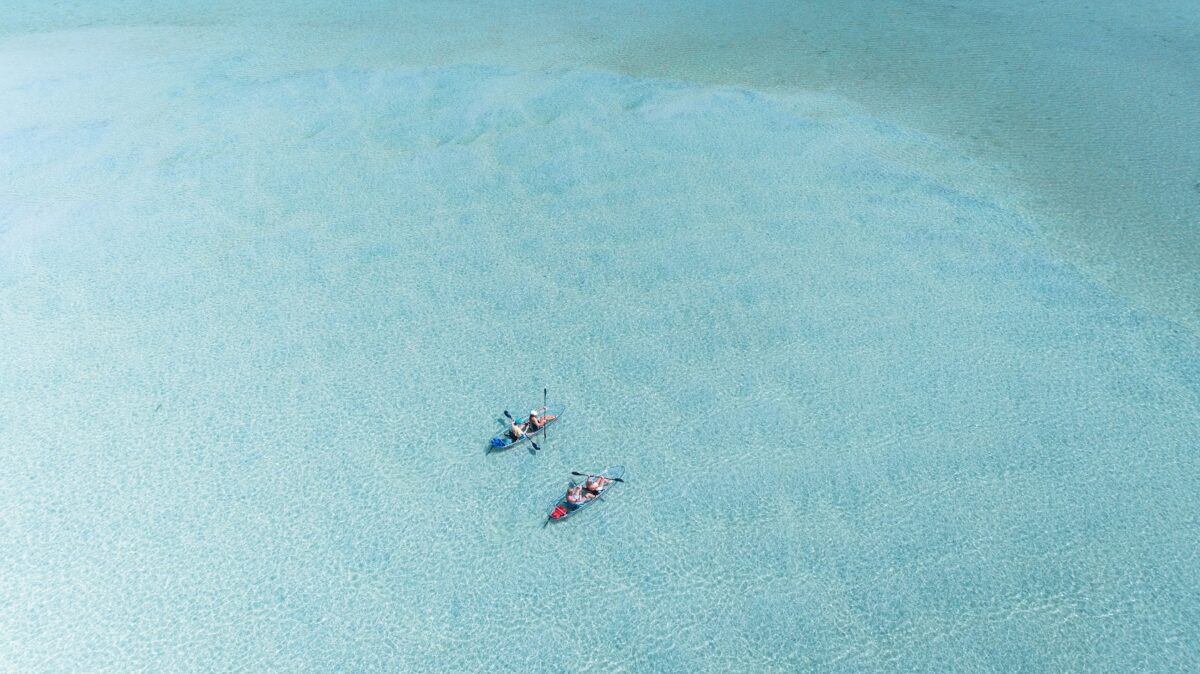
Closer to shore, the thing to watch out for isn’t other boaters. In the calm, shallow waters around Shell Key Preserve, you’re a guest in a habitat of seagrass beds, shorebirds, rays and manatees, and the biggest risk is damaging it, or getting too close to the marine life that lives there.
Learn the lay of the land
Amber Buzzi, who owns Get Up And Go Kayaking, advises kayakers to learn the lay of the land before getting on the water. Everyone on her tours watches a safety video ahead of time that covers maritime regulations and shows what Shell Key looks like. Guides review it again on the beach and teach basic paddling technique before launch, so sandbars and currents don’t catch anyone off guard.
Stick to small groups
Then there’s group size. Small groups make it easier to stay together and talk through changes in weather or current, and they’re better for the environment. A guide leading a handful of paddlers can steer clear of shallow seagrass beds, which protects the grass and keeps kayaks from running aground. It also means watching wildlife passively instead of crowding it.
“Conservation is at the heart of what our guides do,” Buzzi says. Nearly all of her guides hold degrees in environmental science, marine biology or a related field, and her location is certified in the Save the Manatee Guardian Guide program, which trains guides in manatee conservation, from passive observation to educating the public on tour.
Her advice for choosing a guide echoes Hubbard’s: look for people who know the ecosystem, not just the route. Ask about their training and how they handle wildlife encounters.